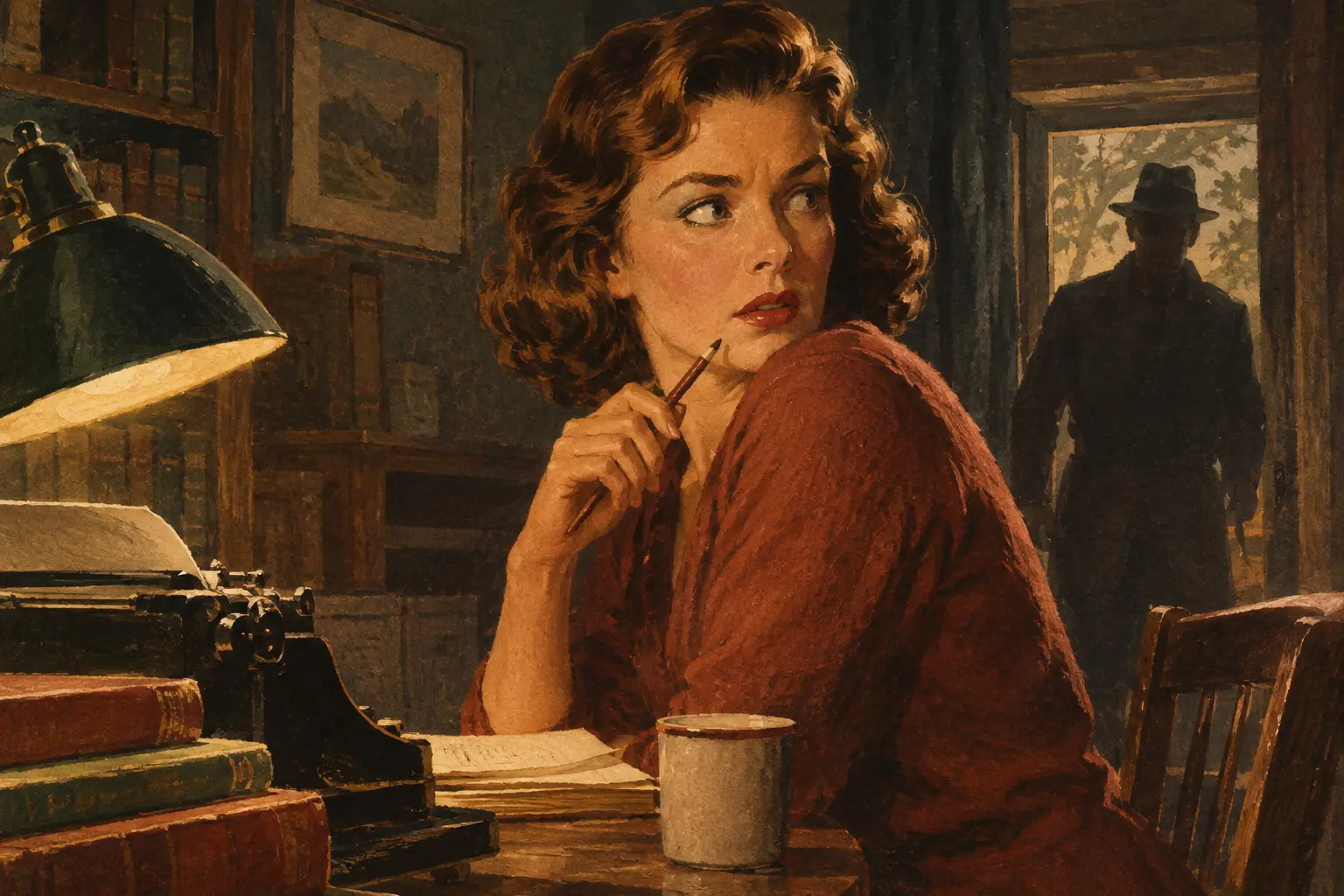
A thriller can seize an evening and still leave nothing behind but a tired thumb hovering over the next recommendation. The better experience begins with choosing Kindle thrillers that do more than manufacture cliffhangers. You want danger, certainly. But you may also want a character whose choices cost something, a threat connected to the world you recognize, and an ending that continues to trouble or strengthen you after the screen goes dark.
Kindle offers abundance, which is both its freedom and its problem. Thousands of titles promise conspiracy, murder, betrayal, and secret power. The challenge is not finding a thriller. It is finding one that meets you at the intersection of mood, appetite, and conviction.
Start With the Kind of Danger You Want
“Thriller” is a wide territory. Two readers can both claim the genre and still want entirely different experiences. One reader wants a hunted protagonist racing through an unfamiliar city before a deadline expires. Another wants the slow pressure of political corruption, where the true danger is not a gunman but an institution willing to erase the truth.
Before you browse, name the threat that interests you right now. Historical thrillers place private courage against the forces of another era: war, tyranny, prejudice, empire, or a dangerous public secret. Political thrillers expose the machinery behind official language and ask who benefits when citizens are kept afraid or uninformed. Supernatural and speculative thrillers turn the pressure inward and outward, making faith, identity, technology, or mortality part of the conflict.
This is not about limiting yourself to one shelf. It is about avoiding a familiar disappointment: buying a book labeled “thriller” when what you really wanted was moral conflict, emotional intensity, or a mystery with a larger purpose. If you are craving a story about resistance, a procedural centered on forensic detail may not satisfy. If you need fast action, a dense political novel that waits 100 pages to ignite may be the wrong choice for this week, even if it is excellent.
Choosing Kindle Thrillers by Stakes, Not Just Tropes
Tropes help readers find a door. Stakes tell them whether they want to walk through it.
A missing person, a secret society, a rogue agent, or an ancient artifact can all produce suspense. Yet the strongest thrillers make the external premise matter because it strikes at something human. A protagonist does not merely need to stop an attack. They may be trying to protect a child, preserve their name, confront an old betrayal, or decide whether justice can survive compromise.
When reading a book description, look past the first dramatic sentence. Ask three questions: What can be lost? Who will pay if the protagonist fails? What difficult choice is waiting beneath the chase?
The answers reveal whether the story has weight. A novel about a government cover-up becomes more compelling when exposure could destroy a family or trigger public unrest. A story about a devil’s bargain becomes sharper when the character must decide what part of themselves is worth sacrificing. Suspense is strongest when urgency and conscience collide.
That does not mean every Kindle thriller must be solemn. A lean, explosive read can be exactly right after a long week. But even a fast book benefits from a pulse beneath the plot. The pages turn faster when readers care about what the speed is carrying them toward.
Read the Sample Like a Casting Call
The Kindle sample is one of the most useful tools a reader has. Treat it as more than a test of grammar or formatting. It is your first encounter with the author’s control of tension.
In the opening pages, notice whether the scene has a clear pressure point. Something does not need to explode immediately, but the prose should create a question you want answered. Why is this person afraid? What are they not saying? Why does this ordinary moment feel unstable?
Then listen for voice. Some thriller writers are direct and cinematic, moving quickly through action and dialogue. Others build dread through observation, atmosphere, and interior conflict. Neither approach is superior. The question is whether the voice fits the reading experience you want.
Pay attention to the protagonist as well. A flawed lead can be magnetic. A damaged, angry, compromised, or grieving character may be far more believable than a hero who always knows what to do. Still, flaws should create tension, not exhaustion. If you feel no curiosity or sympathy after the sample, trust that reaction. You do not have to admire a character to follow them, but you should feel that their fate matters.
Match the Book to Your Reading Mood
Readers often blame a book for failing to meet a need they never identified. The right Kindle thriller depends partly on the space you are bringing to it.
If your attention is fractured, choose a novel with short chapters, a close point of view, and an immediate central problem. If you want to sink into a world, look for historical scope, layered timelines, or a speculative setting with consequences beyond one crime. If you are weary of real-life headlines, a supernatural thriller or space-based conflict may give you distance without sacrificing urgency. If you want fiction that speaks directly to power and public life, political suspense can turn anxiety into a sharper form of engagement.
Content preferences matter, too. Dark subject matter can be meaningful, but there is a difference between a novel that examines violence and one that lingers on it for spectacle. Read the description and sample for clues about tone. Is the book interested in cruelty, or in the people trying to survive it? Does it use moral ambiguity to deepen the story, or simply to make everyone cynical?
The answer may depend on your mood. There are times for bleakness, and times when you need a story that recognizes darkness while still making room for courage.
Let Reader Reviews Reveal Patterns
Reviews are most valuable when you stop treating the star rating as a verdict. A four-star review can tell you more than a five-star cheer if it explains what the book actually delivers.
Look for repeated observations. If multiple readers praise the pacing, the novel likely moves with confidence. If several mention a slow opening, decide whether that is a deal-breaker or simply the cost of richer setup. If readers call the book “political,” “violent,” “faith-centered,” “character-driven,” or “thought-provoking,” those labels can help you judge fit.
Be cautious with complaints that may actually describe someone else’s mismatch. “Too much history” may be a warning to a reader seeking pure action and an invitation to someone who loves historical texture. “Not enough romance” is only a flaw if romance was essential to the reader’s expectations. “Too dark” deserves attention, but darkness itself is not a defect when it serves the story honestly.
The most useful reviews mention specifics without spoiling the turning points. They tell you how a book feels to read: breathless, haunting, cerebral, brutal, hopeful, or emotionally raw.
Look for Series Promise Without Feeling Trapped
A first book in a series can be a gift. When the world is compelling and the central character has unfinished business, you have more story waiting. But a series should not require blind loyalty.
Check whether the book offers a complete conflict of its own. A good installment can leave doors open while still giving the reader a meaningful resolution. Be wary of descriptions that lean entirely on “to be continued” energy, especially if you want a satisfying weekend read rather than a long commitment.
Series also reward readers who enjoy watching consequences accumulate. Trust changes. Old enemies return. A decision made in one book becomes the wound beneath the next. For readers drawn to questions of power, freedom, and personal resilience, that continuity can make the danger feel more real.
Independent authors can be especially rewarding here. They often take risks with genre boundaries, combining political conflict, historical pressure, speculative ideas, and emotional reflection in ways traditional categories do not always anticipate. G.H. White’s fiction lives in that charged space, where suspense is not separate from the questions a reader carries into the story.
Give Yourself Permission to Quit
There is no prize for finishing a thriller that has lost its grip on you. A book can be well written, popular, and perfectly suited to another reader while still failing to connect with your present mood.
Set a fair test. The sample may be enough, or you may give a book several chapters to establish its rhythm. Then be honest. Are you turning pages because the story has you, or because you feel obligated to make the purchase worthwhile?
A thriller should create forward pull. That pull can come from action, dread, curiosity, emotion, or an argument the novel is making about the world. When it is there, you will feel it. Choose the book that makes you want one more chapter, then gives that impulse a reason to matter.
Written by :

Join the Reader Circle
Get exclusive updates, early previews, and behind-the-scenes insights from G.H. White — delivered straight to your inbox.
No spam. Just stories, sneak peeks, and the occasional surprise.