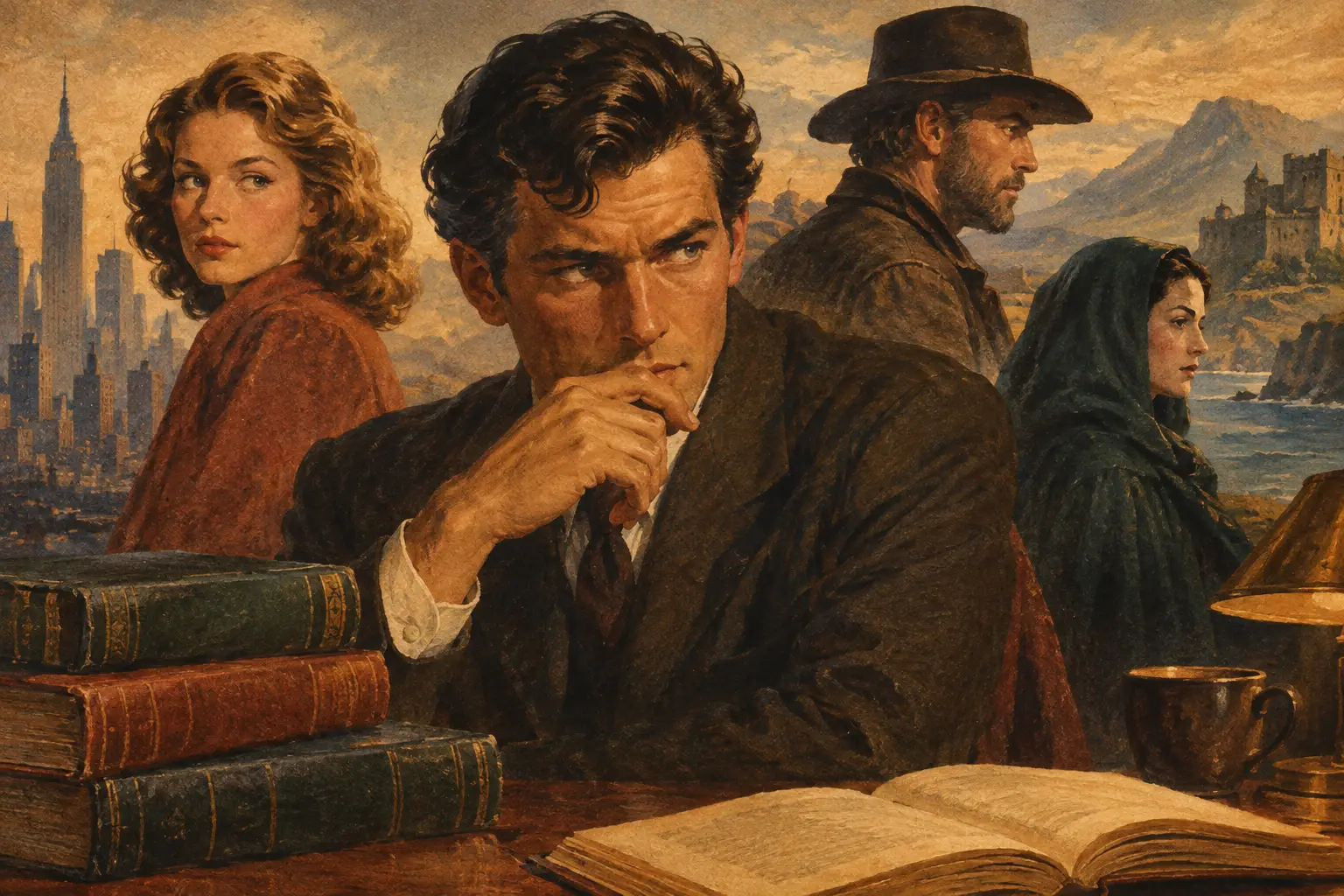
A government does not have to collapse for political fiction to feel dangerous. Sometimes the danger is quieter: a law that changes who belongs, a lie repeated until it becomes public truth, a frightened citizen deciding silence is safer than courage. These political fiction reading recommendations are for readers who want more than a villain in a suit. They are for those who want suspense, moral pressure, and stories that make power feel personal.
Political fiction is not one narrow genre. It can be a dystopian nightmare, a historical warning, a military thriller, a literary confession, or a science-fiction conflict fought across planets. What connects these books is their willingness to ask the hard question: what happens to ordinary people when institutions, ideology, ambition, and fear collide?
What Makes Political Fiction Worth Reading?
The strongest political novels do not merely announce a position and wait for applause. They put convictions under strain. They show what a policy, a revolution, a surveillance state, or a national myth costs the person with the least power to refuse it.
That is why political fiction can stay with a reader long after the plot is finished. The best stories recognize that power does not live only in capitals and courtrooms. It reaches into marriages, friendships, faith, work, memory, and the private choices people make when no heroic option is left.
A good place to begin is with the kind of tension you want. Do you want the cold machinery of authoritarian control? The dread of a democracy sliding toward extremism? A story about empire, race, class, gender, war, or the compromises made in the name of security? Your answer will shape the right reading path.
Political Fiction Reading Recommendations by Mood
For readers confronting surveillance and authoritarian control
George Orwell’s 1984 remains one of the clearest and most unsettling examinations of totalitarian power. Winston Smith’s rebellion is not grand at first. It begins in the intimate territory of thought, desire, and memory. That is precisely why the novel has endured. Orwell understands that tyranny wants more than obedience. It wants to control reality itself.
Read 1984 for its ruthless clarity, but do not expect comfort. Its world is airless by design, and its emotional force comes from watching a man discover how vulnerable private truth can be when the state claims ownership of language.
Margaret Atwood’s The Handmaid’s Tale approaches authoritarianism through the body, religion, and social hierarchy. Offred’s voice is controlled, observant, and quietly defiant. The novel’s political force comes from its refusal to treat oppression as abstract. Every restriction has a human consequence. Every ceremony exposes a system built to make cruelty appear sacred.
These two books pair well because they show different faces of control. Orwell focuses on the destruction of truth. Atwood examines the weaponization of identity and belief.
For readers who want history turned into a warning
Sinclair Lewis’s It Can’t Happen Here imagines an American authoritarian movement rising through democratic institutions. Written in 1935, it can feel uncomfortably current because it understands that freedom rarely disappears with a single dramatic announcement. It erodes through fear, grievance, promises of order, and the public’s willingness to believe that constitutional protections will somehow apply to everyone except the people being targeted.
Philip Roth’s The Plot Against America offers an alternate-history America in which Charles Lindbergh becomes president and antisemitism moves closer to the center of national life. Roth tells the story through a child’s perspective, which makes the political terror especially sharp. The country changes, but family dinners still happen. Neighbors still smile. That contrast is the point. History becomes frightening when it enters the home.
Both novels remind readers that political disaster is not always announced by marching boots. Sometimes it arrives as a campaign promise that sounds reassuring to people who are not yet in danger.
For readers drawn to revolution, class, and competing ideals
Ursula K. Le Guin’s The Dispossessed is a vital choice for readers who want political fiction with philosophical depth. Its central character, Shevek, moves between two societies: one shaped by capitalist wealth and hierarchy, the other by anarchist ideals that have hardened into their own forms of conformity.
Le Guin does not offer an easy verdict. Instead, she explores what happens when noble ideas meet human pride, scarcity, jealousy, and bureaucracy. The result is not a lecture. It is a deeply felt story about belonging, intellectual freedom, and the painful gap between a revolution’s promise and its daily reality.
For a more immediate and incendiary vision of social collapse, turn to Octavia E. Butler’s Parable of the Sower. Set in a near-future America fractured by climate disaster, violence, economic inequality, and privatized security, the novel follows Lauren Olamina as she builds a new belief system amid catastrophe. Butler’s future feels frightening because it is assembled from pressures readers already recognize.
Her real subject is not despair. It is adaptation. Who becomes a leader when every institution fails? What kind of faith can survive without becoming another tool of domination? Those questions give the novel its fierce pulse.
For readers who want espionage, war, and divided loyalties
Viet Thanh Nguyen’s The Sympathizer is a brilliant, darkly funny, and morally complex novel about a communist spy embedded in the South Vietnamese community in the United States after the fall of Saigon. The narrator is a man of divided identities, divided loyalties, and divided conscience. He sees the hypocrisies of every side because he belongs fully to none of them.
This is political fiction with teeth. It exposes the stories nations tell about war, heroism, and rescue, while never losing sight of the human wreckage left behind. Readers who enjoy unreliable narrators, espionage, and prose that cuts with precision will find much to wrestle with here.
Richard Condon’s The Manchurian Candidate remains another potent choice for readers who enjoy conspiracies and political paranoia. Its premise is audacious, but its deeper concern is serious: how easily can patriotism be manipulated, and what happens when public power becomes entangled with private ambition? The book is feverish, satirical, and deliberately unsettling.
Choose Books That Challenge Your Own Assumptions
Political fiction can become an echo chamber if every book simply confirms what the reader already believes. A richer reading life includes novels that complicate your instincts. That does not mean treating every ideology as equally humane or every argument as equally sound. It means allowing fiction to show why people accept systems that hurt them, defend leaders who betray them, or compromise when courage seems impossibly expensive.
When choosing your next book, pay attention to the scale of the conflict. A sweeping dystopia can reveal the machinery of power. A close first-person novel can show its emotional cost. Neither approach is automatically better. It depends on whether you are looking for a panoramic warning or a character whose choices leave a bruise.
It also helps to vary the eras. Read a classic beside a contemporary work. Read a novel set in a familiar America beside one that examines empire from outside the American frame. Political fiction becomes more powerful when it interrupts the comfortable assumption that history belongs to someone else.
When You Want a Thriller With a Political Heart
Some readers want the ideas, but they also want the chase, the betrayal, and the sense that one decision could expose a larger conspiracy. That is where political thrillers earn their place. The best of them understand that suspense is not separate from meaning. A cover-up matters because people will suffer if it succeeds. A corrupt official is frightening because power can turn private greed into public damage.
For readers who like freedom-centered suspense with a speculative edge, G.H. White’s Reviving the Statue of Freedom belongs on the shelf as a politically charged story shaped by questions of national identity, resistance, and what a symbol means when the country beneath it is under pressure.
The right political novel does not tell you what to think and then close the case. It leaves you alert to the stories power tells, the fears it feeds, and the courage required to remain human when the stakes are highest.
Written by :

Join the Reader Circle
Get exclusive updates, early previews, and behind-the-scenes insights from G.H. White — delivered straight to your inbox.
No spam. Just stories, sneak peeks, and the occasional surprise.