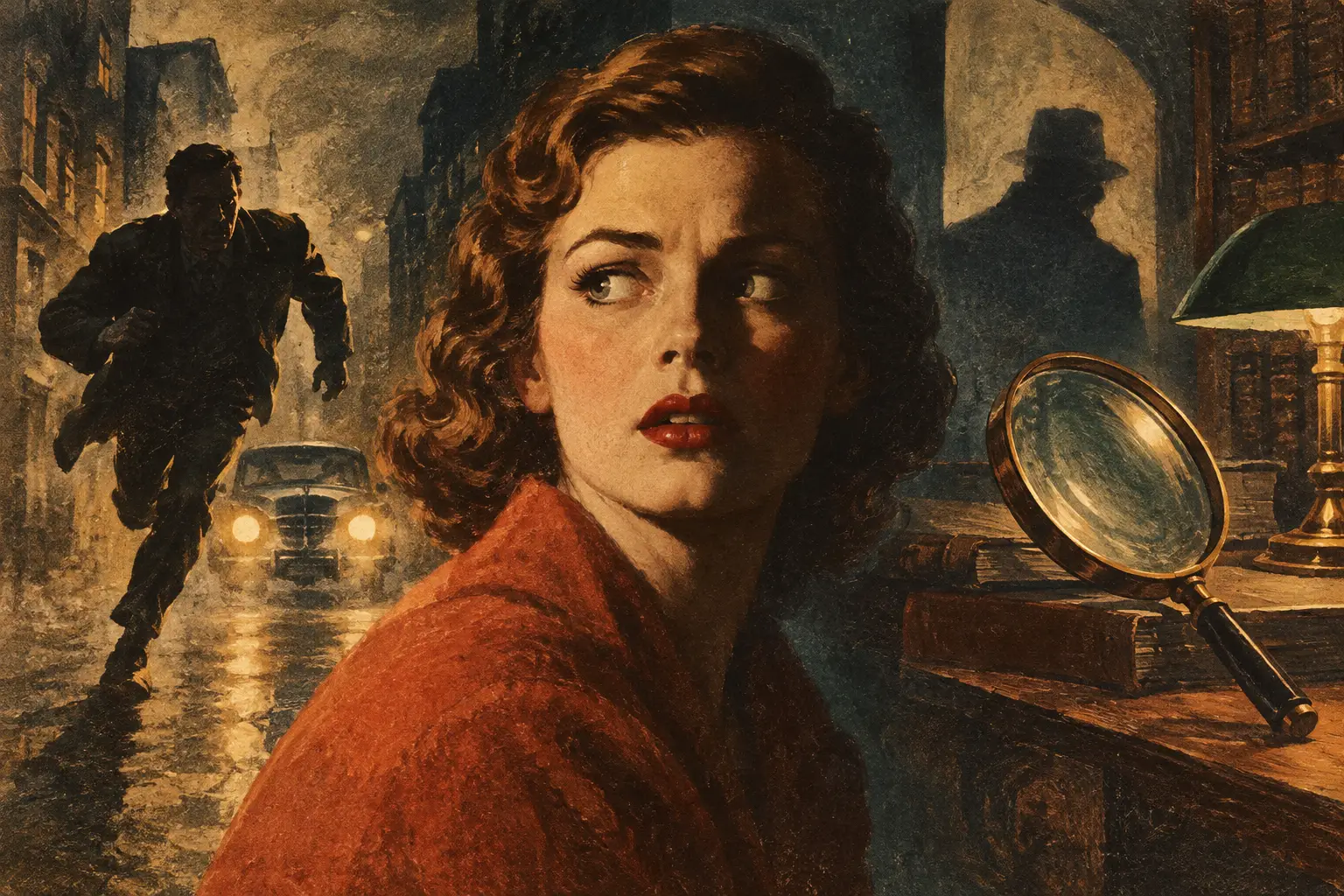
A thriller earns its pulse from danger. But the indie thrillers readers remember often carry a second current beneath the chase, the conspiracy, or the body count: a question that refuses to stay on the page. What does a decent person owe when power becomes corrupt? How much truth can someone bear before it breaks the life they built? And what does survival cost when silence is safer than resistance?
That is where independent suspense can feel startlingly alive. It is not built merely to satisfy a market category or follow a familiar series formula. At its best, it takes the riskier road. It lets characters make terrible choices for understandable reasons. It allows institutions to fail. It gives the reader not only a villain to fear, but a system, belief, memory, or hidden hunger to confront.
Indie Thrillers Have Room for Dangerous Ideas
Big publishing has produced extraordinary thrillers, and a larger budget can bring editorial muscle, broad distribution, and a polished campaign. Yet scale can also create caution. When every decision is tied to a large commercial forecast, familiar premises and predictable emotional beats can appear safer than stories that disturb the reader’s assumptions.
Independent authors have more freedom to write toward the pressure point. A political thriller can question who benefits from fear. A historical suspense novel can expose the old violence beneath a national myth. A supernatural chase can become a story about faith, temptation, and the price of wanting control over death itself.
That freedom does not automatically make a book good. Independent publishing has no quality guarantee, just as traditional publishing does not guarantee daring. The difference is possibility. An indie author can pursue an idea that is too politically sharp, too structurally unusual, too dark, or too difficult to fit neatly into a sales meeting. For readers who want fiction with teeth, that possibility matters.
The Stakes Feel Personal Before They Become Public
The strongest thrillers know that the fate of a city, a government, or the world means little unless one human being stands to lose something irreplaceable. A secret document is only paper until it can destroy a family. A military order is only procedure until it asks a soldier to betray a moral line. A conspiracy is only background noise until it enters a character’s home.
Indie fiction often works especially well in this intimate space. Without the obligation to build every story around a gigantic spectacle, an author can stay close to the wound. The protagonist may be a disgraced investigator, a reluctant witness, a veteran carrying an old failure, or an ordinary person whose private grief makes them vulnerable to manipulation.
This does not mean the plots are small. It means the danger has a human face. Readers can feel the threat in a sleepless night, an unanswered phone, a lie told to protect someone, or the moment a character realizes that the person they trusted is part of the trap.
Suspense Is Not Just Speed
Fast pacing matters, but speed alone is not suspense. A story can race through explosions, escapes, and reversals while leaving no lasting mark. Suspense deepens when the reader understands what each decision costs and begins to dread the moment when every available choice becomes wrong.
That is why a quiet scene can be as tense as a gunfight. A character deleting evidence. A daughter reading a message she was never meant to see. An official deciding whether to sign an order that will protect their career and endanger strangers. These scenes ask readers to inhabit pressure, not merely observe it.
For an author, this requires discipline. The action must move, but the emotional consequences cannot be skipped. For a reader, the reward is a thriller that does not vanish the moment the final villain falls.
Genre-Bending Can Reveal More Than a Straight Line
Some readers want a clean procedural. Others want a historical thriller rooted in a specific era, a political conspiracy with real-world echoes, or a speculative story that pushes danger beyond the limits of ordinary life. Indie publishing has become one of the most fertile places for these crossings.
A speculative element can sharpen a moral conflict rather than distract from it. A deal with the devil can expose ambition. A future military conflict can test loyalty and national identity. An alternate version of American history can reveal how fragile freedom becomes when people decide that security is worth any sacrifice.
The trade-off is real. Genre blending asks more of the writer. The rules of the world must be clear enough to create trust, and the thriller engine must keep running even as the story explores larger questions. When the balance fails, the book can feel scattered. When it succeeds, the genre elements illuminate one another.
A political thriller with a supernatural edge can make corruption feel literal. A historical mystery can show how old injustice continues to shape the present. Science fiction can place ordinary human flaws under extraordinary pressure. The setting changes, but the central question remains familiar: who are we when fear gives us permission to become someone else?
What to Look for When Choosing Indie Thrillers
The independent marketplace is vast, which is a gift and a challenge. Readers have access to voices and premises that might never reach a bookstore table. They also have to choose carefully. A striking cover or a high-concept description can invite attention, but the real test is whether the story knows what it wants to say.
Look for a premise with tension built into its core. A journalist uncovering government wrongdoing is a setup. A journalist uncovering government wrongdoing while protecting the official who once ruined her family has conflict. The best premises create trouble before chapter one because the character’s goal and moral limits are already at war.
Pay attention to emotional specificity. Are the characters only roles in a plot, or do they carry history, contradictions, and desires that make their choices feel dangerous? A villain becomes more frightening when their logic is recognizable. A hero becomes more compelling when courage does not come naturally.
Reader reviews can help, especially when they describe atmosphere, pacing, character depth, and the kind of darkness a book contains. But taste remains personal. One reader’s slow opening is another reader’s necessary build. One reader’s bleak ending is another reader’s honest conclusion. Know whether you want pure momentum, psychological unease, political fire, or a story that moves between all of them.
Why These Stories Matter Beyond the Last Page
A good thriller gives the reader the pleasure of pursuit: the clue, the reversal, the breathless run toward revelation. A memorable one leaves something harder behind. It makes us notice how authority speaks, how fear travels, how easily people can confuse obedience with virtue.
That does not require a lecture disguised as a novel. Fiction loses its force when characters exist only to deliver a message. The story must still entertain. It needs surprise, conflict, and the fierce pull of wanting to know what happens next. But when an author respects the reader enough to put real moral pressure inside the suspense, the book becomes more than an escape.
At G.H. White, that space between danger and meaning is central: stories where corruption has consequences, freedom is never merely decorative, and courage must be chosen under pressure. The point is not to hand readers easy answers. It is to give them a story vivid enough to keep the questions alive.
The next time you choose a thriller, consider looking beyond the familiar name and the safest premise. Find the book willing to put a character’s conscience on the line. The chase may end at the final page, but the question beneath it may follow you into the dark.
Written by :

Join the Reader Circle
Get exclusive updates, early previews, and behind-the-scenes insights from G.H. White — delivered straight to your inbox.
No spam. Just stories, sneak peeks, and the occasional surprise.