A resistance story becomes unforgettable when victory is never guaranteed. The best fictional stories of resistance do not simply hand readers a villain and a rebel flag. They ask what a person will risk when silence is safer, compromise is rewarded, and power has made itself feel permanent.
That pressure can unfold in a police state, on a battlefield, inside a theocracy, or at a family table. Sometimes resistance means leading an uprising. Sometimes it means telling the truth, protecting one person, preserving forbidden knowledge, or refusing to become cruel in order to survive. These twelve stories endure because they understand that freedom is not an abstract word. It has a cost, a face, and often a scar.
What the Best Fictional Stories of Resistance Demand
The strongest resistance fiction avoids easy heroism. Its characters can be frightened, compromised, divided, or wrong. The systems they oppose are not powerful merely because they have weapons. They control language, memory, work, bodies, faith, history, and the limits of what people believe is possible.
That is why the stories below are more than tales of rebellion. They examine the moral damage of oppression and the dangerous choices made in response. Some offer catharsis. Others deny it. All leave the reader with a sharper question: What would I do when the pressure finally reached me?
1. 1984 by George Orwell
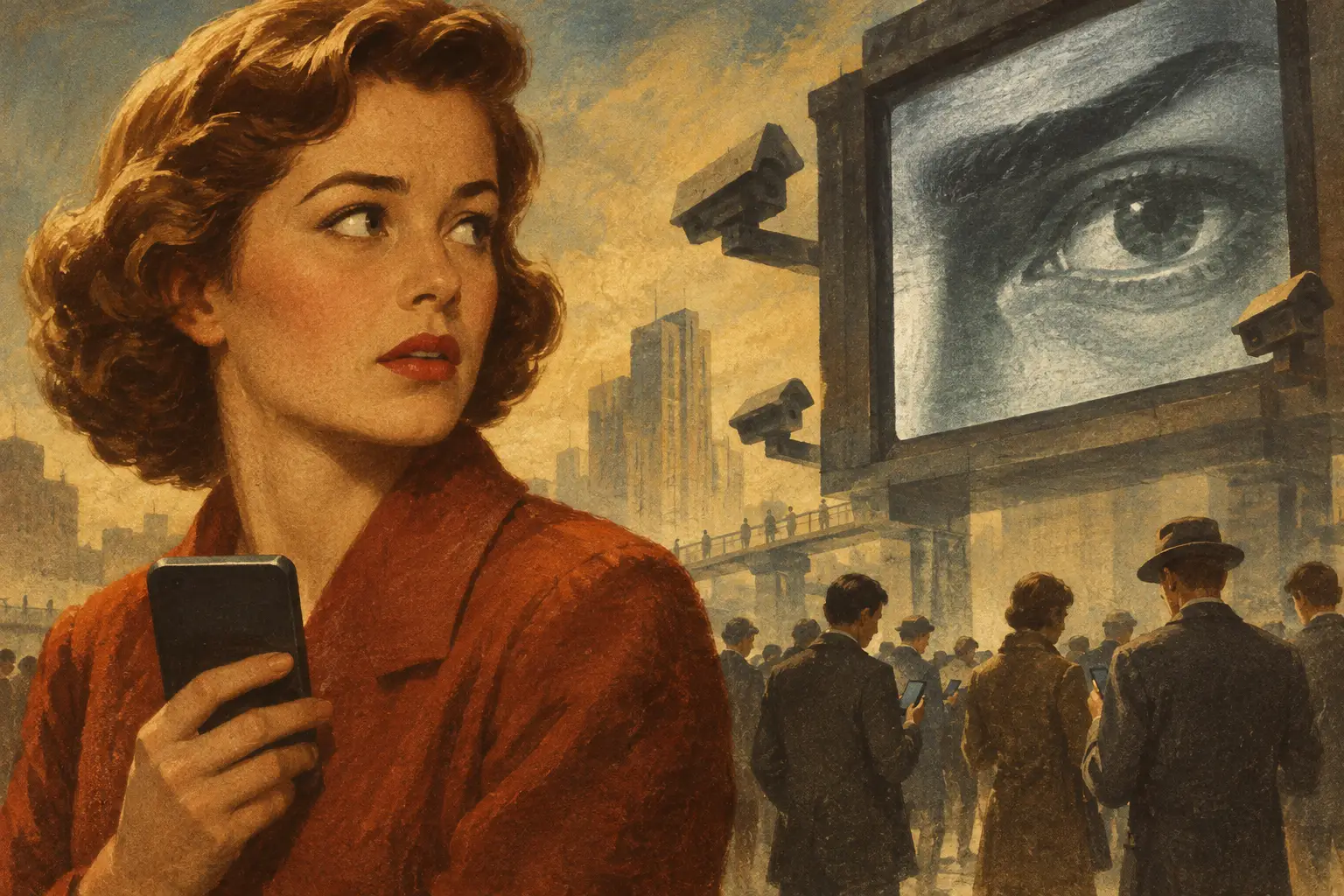
Few novels make resistance feel as lonely as 1984. Winston Smith’s private rebellion begins with a diary, a fragile act in a world where the state claims ownership of reality itself. Orwell’s great warning is not only that tyranny lies. It is that tyranny tries to destroy the inner ground from which a person can recognize a lie.
This is not a story for readers seeking a triumphant uprising. Its power comes from the brutal vulnerability of a man trying to hold onto memory, desire, and an independent thought.
2. The Handmaid’s Tale by Margaret Atwood
Atwood builds terror through restriction. In Gilead, women are renamed, classified, surveilled, and stripped of authority over their own bodies. Offred’s resistance is often quiet: observation, remembered language, prohibited desire, and the refusal to let her former self disappear completely.
That intimacy makes the novel more disturbing than a conventional revolution narrative. It understands that oppressive regimes do not only conquer streets and legislatures. They enter bedrooms, rituals, and private speech.
3. Parable of the Talents by Octavia E. Butler
Octavia E. Butler’s novel is a fierce vision of religious extremism, political collapse, racial violence, and the temptation to call cruelty order. Lauren Olamina builds a community around change and human possibility, yet the novel refuses to pretend that visionary leadership protects anyone from loss.
Its resistance is communal, spiritual, and painfully practical. Butler asks whether hope can remain honest after catastrophe. The answer is never simple, which is precisely why the book hits so hard.
4. The Hunger Games by Suzanne Collins
Beneath the arena spectacle, The Hunger Games is a story about propaganda, manufactured scarcity, and the way authoritarian power turns suffering into entertainment. Katniss Everdeen does not begin as a polished revolutionary. She begins as a survivor trying to protect her sister.
Her defiance matters because it is visible. A gesture, a costume, a refusal to perform grief correctly – each becomes political once the Capitol realizes people are watching. Collins captures how a symbol can inspire others while becoming a burden to the person forced to carry it.
5. V for Vendetta by Alan Moore and David Lloyd
This graphic novel understands that resistance can be both necessary and dangerous. In a fascist England, V wages war against a regime built on fear, censorship, nationalism, and selective memory. Yet Moore and Lloyd do not present him as a comfortable hero.
V is theatrical, brilliant, wounded, and morally unsettling. The story presses readers to consider the difference between justice and revenge, and whether freedom can be handed down by someone who still controls the terms of liberation.
6. The Man in the High Castle by Philip K. Dick
Philip K. Dick’s alternate-history novel imagines an America divided between victorious Axis powers after World War II. Instead of centering only on armed rebellion, it follows ordinary people navigating occupation, collaboration, prejudice, and identity under a distorted political order.
Its strange, unstable reality is part of the point. Totalitarianism depends on making the world feel fixed and inevitable. Dick shows how dangerous that illusion becomes when people no longer trust their own perception of history.
7. The Fifth Season by N. K. Jemisin
Jemisin’s fractured fantasy epic begins with a world already broken by systemic violence. Orogenes possess the power to control seismic forces, but they are feared, controlled, exploited, and denied full humanity. Their oppression is built into the laws, language, and survival structures of the Stillness.
What makes this novel extraordinary is its refusal to separate personal trauma from political force. Resistance here is not clean rebellion against an evil ruler. It is a struggle to reclaim personhood in a civilization designed to use some people and discard them.
8. A Tale of Two Cities by Charles Dickens
Dickens gives revolution its full human weight: the rage that creates it, the injustice behind it, and the violence that can consume it. Set against the French Revolution, the novel does not ask readers to mourn the fall of a corrupt aristocracy. It asks them to see what happens when suffering is ignored until vengeance becomes the only language left.
Sydney Carton’s final choice gives the story its moral force. Resistance is not always revolt. Sometimes it is sacrifice made for a future one may never live to see.
9. Kindred by Octavia E. Butler
In Kindred, a Black woman from 1970s California is repeatedly pulled back to a Maryland plantation before the Civil War. The time-travel premise strips away sentimental distance from American slavery. Dana cannot observe history safely. She must endure its violence while confronting the terrible compromises survival can demand.
Butler makes resistance intensely personal: escape, literacy, memory, dignity, and the effort to protect one’s own moral center. The novel is devastating because it recognizes that courage does not always look like control.
10. Children of Men by P. D. James
A society facing mass infertility has surrendered much of its conscience in exchange for order. P. D. James creates a Britain where hopelessness becomes a governing tool, and people accept cruelty because they no longer believe a future exists worth defending.
The resistance in Children of Men begins with the possibility of new life, but its deeper conflict concerns responsibility. When a world has grown numb, choosing to care becomes radical. The novel’s suspense lands because hope makes every character a target.
11. Les Misérables by Victor Hugo
Hugo’s vast novel sees resistance in law, poverty, faith, mercy, and revolution. Jean Valjean’s life becomes an argument against the belief that a person can be reduced to a crime, a class, or a number. Around him, young idealists prepare to fight for a republic that may not arrive in their lifetime.
The barricade scenes are unforgettable, but the novel’s deepest resistance may be compassion. Hugo insists that structural injustice and personal mercy are not separate concerns. A society that cannot recognize human dignity will eventually face its own reckoning.
12. The Dispossessed by Ursula K. Le Guin
Le Guin offers a more subtle form of resistance fiction. Her protagonist, Shevek, leaves an anarchist society for a capitalist rival world, only to discover that neither system is free of hierarchy, vanity, and control. His struggle is intellectual, emotional, and political.
This is the essential trade-off at the heart of the novel: liberation can harden into dogma if people stop questioning the institutions they built to escape oppression. The Dispossessed is ideal for readers who want resistance fiction that distrusts easy answers, including its own.
Read for the Pressure Point
There is no single best kind of resistance story. Some readers need the fire of an uprising. Others will feel the sharper wound of a character protecting a forbidden memory, refusing a lie, or choosing mercy inside a system built to erase it.
Choose the story that unsettles your certainty, not merely the one that confirms it. The fiction that stays with us is rarely about heroes who never fear power. It is about people who fear it, see what it is doing, and decide that fear will not have the final word.
Written by :

Join the Reader Circle
Get exclusive updates, early previews, and behind-the-scenes insights from G.H. White — delivered straight to your inbox.
No spam. Just stories, sneak peeks, and the occasional surprise.